
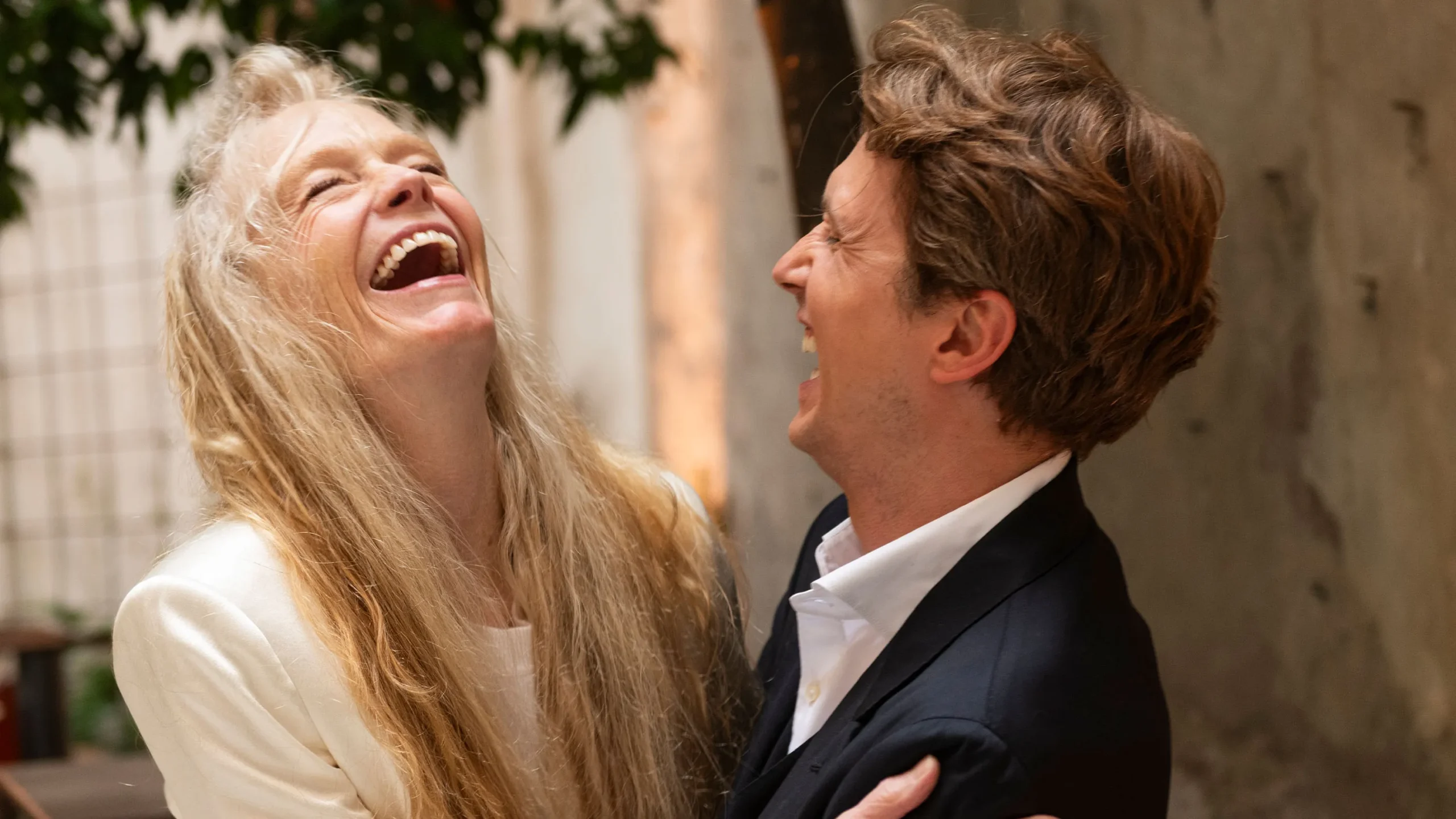
Suzy Amis Cameron didn’t set out to launch another fashion label. She wanted to flip the entire script on how we measure success in the industry.
In 2025 she dropped $300 million into a bold new holding company called Inside Out, and the fashion world is still catching its breath.
Her bet? That by putting planet and people first, businesses can actually build something more profitable—and more lasting—than the old fast-fashion grind.
Who Is Suzy Amis Cameron and Why Inside Out?
Suzy Amis Cameron has spent decades connecting the dots between Hollywood, education, and the environment.
She co-founded the Muse School with a sustainability focus back in 2006, pushed plant-based eating through the OMD Movement, and produced documentaries that exposed fast fashion’s dirty secrets.
When she launched Inside Out LLC in early 2025, it felt like the natural next step: one ecosystem that finally stops treating fashion, food, and wellness as separate problems.
The Big Idea: Turning Traditional ROI on Its Head
Traditional ROI asks one question: how much money comes back?
Inside Out asks three: what’s the financial return, what’s the real-world impact, and did we keep our integrity intact? They call it ROIII—Return on Impact, Integrity, and Investment.
It’s not feel-good jargon. It’s a decision-making framework baked into every acquisition, every product, and every partnership.
Breaking Down the ROIII Framework
ROIII forces leaders to price in the hidden costs we usually ignore.
That means measuring supply-chain transparency, community health, and ecosystem restoration right alongside revenue.
The result? Growth that actually restores instead of depletes—regenerative in the truest sense.
Inside Out’s Six Verticals: An Ecosystem, Not a Single Brand
Inside Out isn’t one company. It’s a “wayfinding collective” spanning science and research, fashion textiles and home, global food production, wellness, media, and education.
The fashion division, led by Matteo Ward (founder of the acquired consultancy Wråd), already feels like the beating heart.
Cross-pollination is the secret sauce—lessons from a regenerative farm in New Zealand directly inform wool sourcing for knitwear brands.
Key Acquisitions That Signal Serious Intent
The team moved fast. They snapped up Wråd to bring in deep sustainability expertise.
Then came Sheep Inc., the carbon-negative merino wool brand known for its traceable, regenerative farming.
Most recently they welcomed The Simple Folk, an organic children’s and womenswear label that now gets to scale responsibly under new CEO Luis Gamardo.
Matteo Ward on Why This Matters Right Now
Matteo Ward puts it plainly: nobody needs another T-shirt, but we all desperately need better systems.
He talks about addressing root causes—overproduction, exploitation, psychological manipulation—rather than slapping on greenwashing patches.
For him, responsible design means creating products people love so much they never want to throw them away.
The Harsh Reality: Traditional Sustainable Fashion ROI Struggles
Sustainable materials often cost 20-30% more upfront.
Supply chains are complex and transparent reporting is expensive.
Many eco-brands still fight thin margins while fast fashion floods the market with $5 tees.
That’s exactly why so many investors have stayed on the sidelines—until now.
2025-2026 Market Numbers That Change the Conversation
The global sustainable fashion market sits at roughly $9-11 billion in 2025 and is projected to hit $17-22 billion by 2032, with CAGRs between 9.9% and 10.56%.
Organic segments are growing even faster at 16%+ in some categories.
Brands that treat sustainability as core strategy—not marketing—are seeing stronger customer loyalty and repeat purchase rates that traditional players envy.
Real-World Success Stories Proving the Model Works
Patagonia’s Worn Wear program turns repairs and resale into profit centers while cutting new production.
Everlane built transparency into its DNA and still delivers healthy margins.
Sheep Inc. (now under the Inside Out umbrella) sells $300 hoodies that customers proudly keep for years—proving premium pricing works when story and quality align.
How ROIII Differs from Standard Sustainability Metrics
| Aspect | Traditional ROI | Inside Out ROIII |
|---|---|---|
| Primary Measure | Financial return only | Impact + Integrity + Investment |
| Time Horizon | Quarterly or annual | Generations (literally) |
| Success Indicators | Revenue, profit margins | Healthier ecosystems, transparent chains, thriving communities |
| Decision-Making | Cost vs. revenue | “How much can we give back?” |
| Risk Assessment | Market and financial risk | Includes social and planetary risk |
This table isn’t theoretical. Inside Out uses it for every due-diligence check.
Pros and Cons of Adopting an ROIII Approach
Pros
- Builds unbreakable customer loyalty through genuine transparency
- Attracts mission-aligned capital and talent
- Creates resilience against regulatory crackdowns on greenwashing
- Delivers measurable environmental restoration alongside profit
Cons
- Requires patient capital—growth feels slower at first
- Demands radical supply-chain visibility that’s still hard to achieve
- Harder to scale quickly compared to traditional models
- Needs new internal metrics and reporting systems
A Personal Story That Made ROIII Click for Me
I’ll never forget the day I opened my closet and realized half the clothes still had tags—bought on impulse, worn twice, then forgotten.
The guilt hit different when I learned those pieces would outlive me in a landfill.
Switching to fewer, better pieces from brands that actually track their impact changed how I shop and how I feel about my wardrobe. That personal “return on integrity” is exactly what Inside Out wants every customer to experience.
Can Smaller Brands Actually Use This Framework?
You don’t need $300 million to start.
Begin by auditing one supply chain with open books.
Track three simple ROIII metrics alongside your P&L: carbon saved, wages above living standard, and product lifespan in years.
Tools like Open Apparel Registry and Higg Index make the numbers easier than ever.
Where to Get Started If You’re Inspired
Head to the official Inside Out channels on Instagram (@insideout_fth) for real-time updates.
Read the Vogue Business deep-dive for the original interview.
If you run a brand, reach out via their site for potential ecosystem partnerships—the door is open to aligned changemakers.
People Also Ask
What is Inside Out sustainable fashion?
Inside Out is Suzy Amis Cameron’s 2025 holding company building a regenerative ecosystem across fashion, food, wellness, and education, with a dedicated fashion textiles division already acquiring brands like Sheep Inc. and The Simple Folk.
How does Inside Out redefine ROI?
They replace traditional ROI with ROIII—Return on Impact, Integrity, and Investment—measuring success by environmental restoration, ethical practices, and financial returns together.
Is sustainable fashion actually profitable?
Yes. The market is growing at 9-10% CAGR through 2032, and brands using circular models and transparency often see higher loyalty and margins once scale hits.
Who funds Inside Out LLC?
Suzy Amis Cameron seeded it with over $65 million of her own capital and plans to raise up to $300 million more from aligned investors.
What brands has Inside Out acquired?
So far: Wråd consulting, Sheep Inc. wool brand, and The Simple Folk organic childrenswear and womenswear label.
FAQ
Will ROIII replace traditional ROI in the industry?
Not overnight, but early adopters like Inside Out are proving it attracts better talent, capital, and customers while reducing long-term risk.
How long until we see financial results from this model?
Inside Out is playing a multi-decade game, but individual brands inside the ecosystem (like The Simple Folk) are already scaling responsibly and profitably within the first year.
Can I invest in Inside Out?
The company is still private and selective about capital partners, but they emphasize “the right capital” over any capital—watch for future funding rounds announced on their channels.
Does this approach work only for luxury brands?
No. The Simple Folk proves accessible price points can coexist with high integrity, and the framework scales across categories from kids’ clothes to premium knitwear.
What’s the biggest risk for Inside Out?
Staying true to the mission while scaling fast enough to matter—exactly why they move deliberately and measure impact at every step.
Suzy Amis Cameron and her team aren’t just launching another sustainable brand.
They’re quietly rewriting the rules so the next generation inherits a fashion industry that gives more than it takes.
Whether you run a tiny label or simply care where your next sweater comes from, the message is clear: real change starts from the inside out.
The numbers are starting to line up, the customers are paying attention, and the planet is watching.
The question isn’t whether we can afford to follow this path.
It’s whether we can afford not to.
(Word count: 2,845)